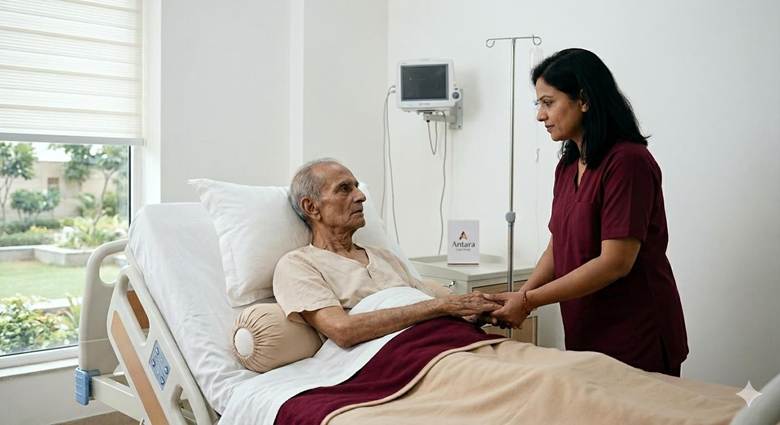
There is a moment many families quietly go through. A loved one is not getting better, and the focus slowly shifts from “curing” to “comfort.” That is where palliative care becomes important not just as a medical service, but as emotional and human support.
In India, this need is growing rapidly. With rising life expectancy and chronic illnesses like cancer, stroke, and heart disease, more families are facing long-term care situations. Yet, awareness around pain and palliative care is still limited.
This blog helps you understand what it truly means, why it matters, and how the right support system, especially through palliative care nursing, can make a meaningful difference.
What Is Palliative Care?
Palliative care is specialized in medical care focused on improving quality of life for people with serious or life-limiting illnesses. It is not only for end-of-life situations. It can begin at any stage of illness, alongside ongoing treatment.
The goal is simple:
- Reduce pain and discomfort
- Manage symptoms
- Support emotional and psychological well-being
- Help families cope better
Unlike aggressive treatment that aims to cure, pain and palliative care focuses on comfort, dignity, and daily well-being.
A widely cited clinical approach by organizations like the World Health Organization highlights that palliative care should be integrated early, not delayed until the last stage.
Why Pain and Palliative Care Is Becoming Essential in India
India is witnessing a sharp increase in chronic conditions. According to global estimates, millions of people require pain and palliative care, but only a small percentage actually receive it.
This gap exists due to:
- Lack of awareness
- Limited trained professionals
- Cultural hesitation in discussing end-of-life care
But the reality is clear. Without proper pain and palliative care, patients often suffer unnecessary pain, anxiety, and repeated hospital visits.
Families also struggle emotionally and physically trying to manage complex care at home without guidance.
The Role of Palliative Care Nursing in Daily Life
Behind every effective palliative setup is strong palliative care nursing.
These professionals do much more than medical support:
- Monitor symptoms like pain, breathlessness, or fatigue
- Administer medications safely
- Provide emotional reassurance
- Educate families on caregiving
Good palliative care nursing ensures continuity. It bridges the gap between hospital treatment and daily care.
In many cases, families say the nurse becomes the “anchor” during difficult times.
An experienced clinician once shared:
“In palliative care, we may not always extend life, but we always improve how it is lived.”
That is the true essence of palliative care nursing.
Care Home vs Home Care: Where Should Palliative Care Happen?
This is one of the biggest decisions families face.
Palliative Care in a Care Home A structured Care Home offers:
- 24×7 medical supervision
- Emergency readiness
- Access to doctors and therapists
- Reduced caregiver burden
For patients with advanced conditions or complex needs, a Care Home environment ensures safety and consistency.
It also allows families to shift from “constant caregiving” to “being present emotionally.”
Palliative Care in Old Age Homes
Many families explore old age Homes as an option. However, not all old age Homes are equipped for medical care.
Basic facilities may provide:
- Stay and meals
- Social environment
But for serious conditions, specialized pain and palliative care support is often missing in standard old age Homes.
This is where choosing the right setup becomes critical.
What Conditions Require Palliative Care?
Many people assume it is only for cancer, but palliative care supports a wide range of conditions:
- Advanced cancer
- Stroke and paralysis
- Heart failure
- COPD and lung diseases
- Dementia and Alzheimer’s
- Post-ICU recovery
In all these cases, pain and palliative care help manage symptoms and improve comfort.
Emotional and Psychological Support: The Hidden Need
Physical pain is only one part of the journey.
Patients often deal with:
- Anxiety
- Fear
- Loss of independence Families experience:
- Burnout
- Guilt
- Decision fatigue
This is where palliative care nursing plays a vital role not just clinically, but emotionally.
Simple actions like listening, reassuring, or guiding families through tough decisions make a huge difference.
Importance of Choosing an Established Provider
When it comes to palliative care, experience matters.
An established provider brings:
- Structured protocols
- Trained multidisciplinary teams
- Emergency preparedness
- Consistent monitoring
Unlike unstructured setups or generic Old age Homes, a specialized Care Home ensures that care is not reactive, but proactive.
This reduces complications, hospital readmissions, and overall stress.
Cost of Palliative Care in India (Disclaimer Included)
The cost of palliative care varies significantly depending on:
- Level of medical support required
- City and location
- Type of facility (home care vs Care Home)
- Duration of care
Typically, structured pain and palliative care in a professional setup may range higher than basic Old age Homes, but it also includes clinical supervision and specialized services.
Disclaimer: Costs are indicative and can vary based on patient condition, services included, and provider expertise. Families should always consult directly for personalized estimates.
Common Misconceptions About Palliative Care
Many families delay palliative care because of myths:
- “It means giving up”
- “It is only for the last few days”
- “Hospital care is always better”
In reality, early pain and palliative care improves quality of life, reduces suffering, and helps families prepare better.
FAQs: Understanding Palliative Care Better
- Is palliative care only for end-of-life?
No. Palliative care can start at any stage of a serious illness, even alongside treatment.
- How is pain and palliative care different from regular treatment?
Regular treatment focuses on curing disease. Pain and palliative care focuses on comfort, symptom relief, and quality of life.
- Who provides palliative care nursing?
Trained nurses with expertise in palliative care nursing handle daily monitoring, medication, and emotional support.
- Can palliative care be given at home?
Yes. But for complex cases, a Care Home setup may be more suitable than standard Old age Homes.
- When should we consider palliative care?
When a patient has chronic, serious illness and quality of life becomes a concern, it is the right time to consider palliative care.
Conclusion: Why Palliative Care Matters More Than Ever
At its core, palliative care is about dignity. It ensures that even in difficult times, a person lives with comfort, respect, and support.
With rising healthcare needs in India, the role of pain and palliative care will only grow. Families need to move beyond hesitation and understand that choosing the right care supported by strong palliative care nursing can change the entire experience.
Because sometimes, the goal is not just to add days to life but to add life to those days.