
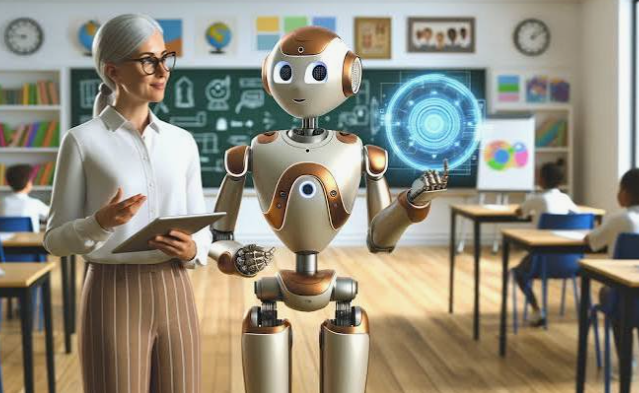
Every learner processes information differently. Some thrive on visual diagrams, others need step-by-step written explanations, and many require repeated practice with instant feedback. Traditional classroom settings often fail to accommodate this diversity, leaving students frustrated and disengaged. The solution lies in adaptive technology that respects individual learning curves. An ai learning assistant bridges this gap by analyzing how you interact with material, identifying weak points, and adjusting content delivery in real time. It does not replace teachers or human mentors, rather, it acts as a supplement that handles repetitive tasks, offers immediate clarification, and tracks progress with measurable precision.
The concept of an ai learning assistant is not about automating education but about personalizing it. When you ask a question, the system does not just return a generic answer. Instead, it breaks down the problem into digestible steps, offers alternative explanations if you indicate confusion, and even suggests related topics you might need to revisit. For example, if you are studying organic chemistry and repeatedly fail questions on reaction mechanisms, the assistant will not simply give you the correct answer. It will reroute you to foundational concepts, provide visual simulations, and generate new practice problems until mastery is achieved. This level of responsiveness is impossible in a one-to-many classroom model.
TeraBox AI has taken a practical approach to this challenge. Its ai learning assistant is embedded directly into file management workflows, which is a surprisingly effective integration. Many students and professionals store lecture notes, research papers, and video tutorials on cloud storage. TeraBox AI scans these files, indexes the content, and allows the assistant to pull relevant information when you ask questions. For instance, if you have saved a 200-page PDF textbook and a set of handwritten notes, the assistant can locate specific chapters, cross-reference your notes, and summarize the key points in plain language. This eliminates the tedious task of manually searching through folders during revision.
What makes TeraBox AI distinct is the emphasis on context. A generic chatbot might give you a Wikipedia-style response. The TeraBox ai learning assistant, however, understands that you are working with specific documents. It uses the material you already trust to generate answers, which reduces the risk of misinformation. This is particularly valuable for niche subjects where generic online sources are either too shallow or unreliable. When you upload a syllabus, the assistant can align its guidance with your curriculum, ensuring that you are studying the right topics at the right depth.
Reliability is a major concern when relying on automated systems. An ai learning assistant must be transparent about what it knows and what it does not. TeraBox AI handles this by citing the specific source files it uses for each answer. If the assistant draws information from a video transcript, it will timestamp the segment. If it uses a PDF, it will highlight the page number. This transparency builds trust because you can always verify the output against the original material. It also allows you to spot errors in your own files, turning the tool into a quality check for your study materials.
Another critical aspect is the handling of different learning modalities. Some users prefer auditory input, so TeraBox AI can convert text summaries into spoken explanations. Others need visual aids, and the assistant can generate simple diagrams or flowcharts based on the content. This multimodal approach ensures that the ai learning assistant serves a wider range of needs without forcing the user to adapt to a rigid interface. The system also adapts to pacing. If you answer questions quickly and accurately, it speeds up the review cycle. If you hesitate or request simpler phrasing, it slows down and provides more scaffolding.
Collaboration is another area where an ai learning assistant shows its worth. Study groups often struggle with coordination. TeraBox AI allows multiple users to share a workspace, and the assistant can moderate discussions, summarize group notes, and identify conflicting information across different members’ files. It does not make decisions for the group but highlights discrepancies and suggests areas that need collective review. This turns the assistant into a neutral facilitator, reducing the friction that often comes with group projects.
There are, however, limitations that should be acknowledged. No ai learning assistant can fully replace the nuanced feedback of a human expert, especially in subjective fields like essay writing or design critique. TeraBox AI is best suited for objective knowledge areas—mathematics, sciences, coding, history facts, language grammar. It can help outline an essay and check for structural coherence, but it cannot judge the elegance of an argument or the emotional impact of a narrative. Users should keep this boundary in mind and use the assistant as a tool for heavy lifting, not as an oracle.
Privacy is another factor. Uploading personal study materials to a cloud service requires confidence in data handling. TeraBox AI uses encryption for stored files and does not use your content to train public models without explicit consent. This is a responsible approach, but you should still read the terms of service carefully. For sensitive documents, consider using the assistant’s local processing features, if available, to minimize data exposure.
In practice, the impact of an ai learning assistant is most visible in long-term retention. Spaced repetition algorithms, which the assistant uses automatically, schedule reviews at optimal intervals. Instead of cramming the night before an exam, you will have been prompted to revisit concepts at strategic points over weeks. This method is backed by cognitive science and significantly improves recall. The assistant tracks your performance on each topic and adjusts the review schedule accordingly, which is something a static study plan cannot do.
For educators, the ai learning assistant offers a way to monitor class progress without micromanaging. Teachers can use TeraBox AI to generate anonymized reports on common mistakes, frequently asked questions, and topic mastery rates. This data helps them adjust lesson plans to address actual gaps rather than assumed ones. It also frees up time for more meaningful one-on-one interactions with students who need extra help.
Ultimately, the value of an ai learning assistant lies in its ability to make continuous learning sustainable. It removes logistical obstacles—searching for materials, checking answers, planning review sessions—so that you can focus on comprehension. TeraBox AI integrates this seamlessly into a tool you already use for storage, which lowers the barrier to adoption. You do not need to learn a new platform or change your habits. You simply start asking questions, and the assistance flows naturally from your existing resources.
One practical tip for getting the most out of an ai learning assistant: organize your files with clear names and folder structures before uploading. The assistant works better when it can accurately categorize content. Also, periodically review the sources it uses. As you update your materials, ensure the old versions are archived or removed to prevent the assistant from referencing outdated information. Over time, the assistant will refine its understanding of your preferences, and the responses will become increasingly precise.
Mistakes are inevitable in any automated system. An ai learning assistant might misinterpret a heavily accented voice command or struggle with handwritten notes that are nearly illegible. Users should treat these errors as feedback for the system. TeraBox AI allows you to flag incorrect responses, which trains the assistant to avoid the same mistake in the future. This continuous feedback loop is essential for improving accuracy and reducing frustration.
For independent learners who do not have access to regular teachers or tutors, the ai learning assistant is a lifeline. It provides on-demand explanations, practice problems, and progress tracking at a fraction of the cost of human tutoring. While it cannot offer mentorship or encouragement on an emotional level, it does provide the structural support that many self-learners lack. Combining the assistant with occasional human interaction gives you the best of both worlds.
In industries where continuous upskilling is required, the ai learning assistant is becoming a standard tool. Professionals use TeraBox AI to keep up with certification changes, new regulations, or newly published research in their fields. Instead of attending lengthy workshops, they interact with the assistant in short daily sessions that fit busy schedules. This micro-learning approach is more effective than intensive training that is quickly forgotten.
The technology behind an ai learning assistant is improving rapidly, but it is not magic. It relies on well-structured input, clear user feedback, and robust algorithms. TeraBox AI has positioned itself as a practical entry point for people who want the benefits of AI without dealing with fragmented tools. By consolidating storage, search, and tutoring in one place, it reduces context switching and keeps your focus on learning.
To summarize what sets a good ai learning assistant apart: it must be accurate, transparent, adaptive, and integrated into existing workflows. TeraBox AI demonstrates these qualities by grounding its answers in user-provided files, offering multimodal explanations, and respecting user privacy. It is not the only product in this space, but its approach is notably grounded and user-centric. As with any tool, its effectiveness depends on how you use it. Engage with it critically, verify its outputs, and use it to amplify your own thinking rather than substitute it.
FAQ
1. Is an ai learning assistant suitable for children or only for adults?
It is suitable for learners of any age, but parental supervision is recommended for younger users. TeraBox AI does not create separate child profiles, so an adult should set up the workspace and review the materials. The assistant is patient and never judges, which can actually benefit shy children who hesitate to ask questions in a classroom. Just make sure the content uploaded is age-appropriate.
2. How does TeraBox AI handle sources that contain conflicting information?
The ai learning assistant flags contradictions rather than silently choosing one side. It presents both versions with citations, allowing you to compare the original texts. In group workspaces, it highlights the conflict and suggests a discussion. It does not resolve the conflict on its own because resolution may require domain expertise or updated external validation.
3. Can an ai learning assistant generate practice tests based on my uploaded materials?
Yes, it can. TeraBox AI uses your files to create multiple-choice, fill-in-the-blank, and short-answer questions. It also generates answer keys with explanations that reference the exact source sections. You can set the difficulty level and the number of questions. This is particularly useful for self-assessment before exams, as the questions are always aligned with your actual study content rather than generic question banks.
The Short Version
- TeraBox AI’s ai learning assistant personalizes education by analyzing user interactions and adjusting content delivery according to individual learning styles.
- The assistant supplements traditional teaching by automating repetitive tasks, providing instant feedback, and tracking learning progress with measurable precision.
- TeraBox AI enhances user experience by offering context-aware responses that reference specific study materials, thus minimizing the risk of misinformation.
- The system accommodates different learning modalities by providing auditory explanations and visual aids, ensuring a broader range of user needs are met.
- Collaboration tools in TeraBox AI facilitate group study by moderating discussions and summarizing collective notes while highlighting discrepancies in information.
- Long-term retention is improved through spaced repetition algorithms that prompt users to revisit concepts at optimal intervals for better memory consolidation.

